Max Graham, Founder
I have just returned from Trás-os-Montes with Bar Douro's Executive Chef Neuza Leal. In Portugal’s far northeast lies a land of bold flavours, ancient traditions and dramatic landscapes. Trás-os-Montes, literally “Beyond the Mountains”, is shaped by isolation. Rugged peaks give way to deep valleys. Summers are dry and unforgiving, winters long and severe. These extremes have defined not only the terrain, but the food and wine that emerge from it. This is a place where heritage runs deep, and where a new generation is reinterpreting tradition with clarity and pride.
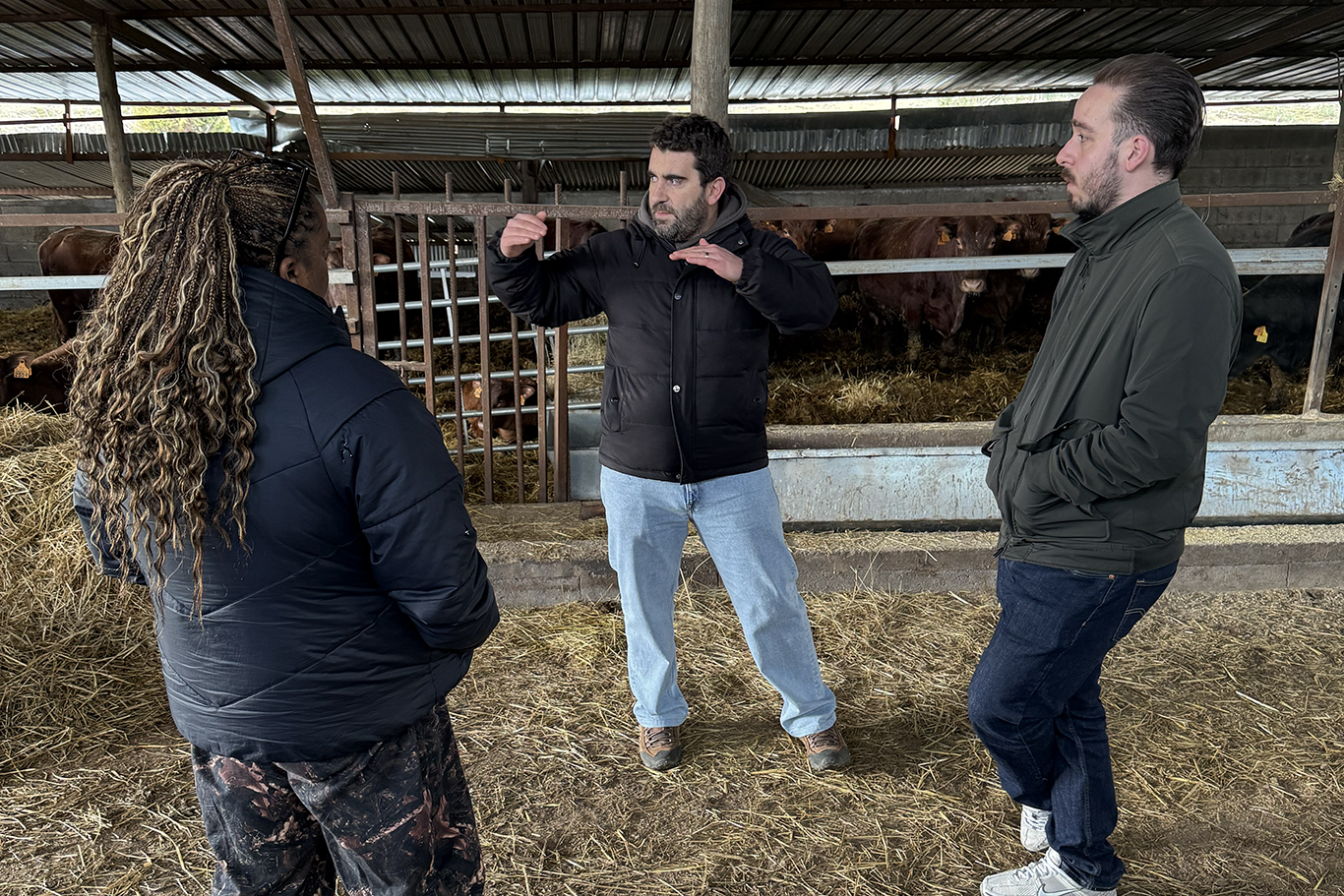
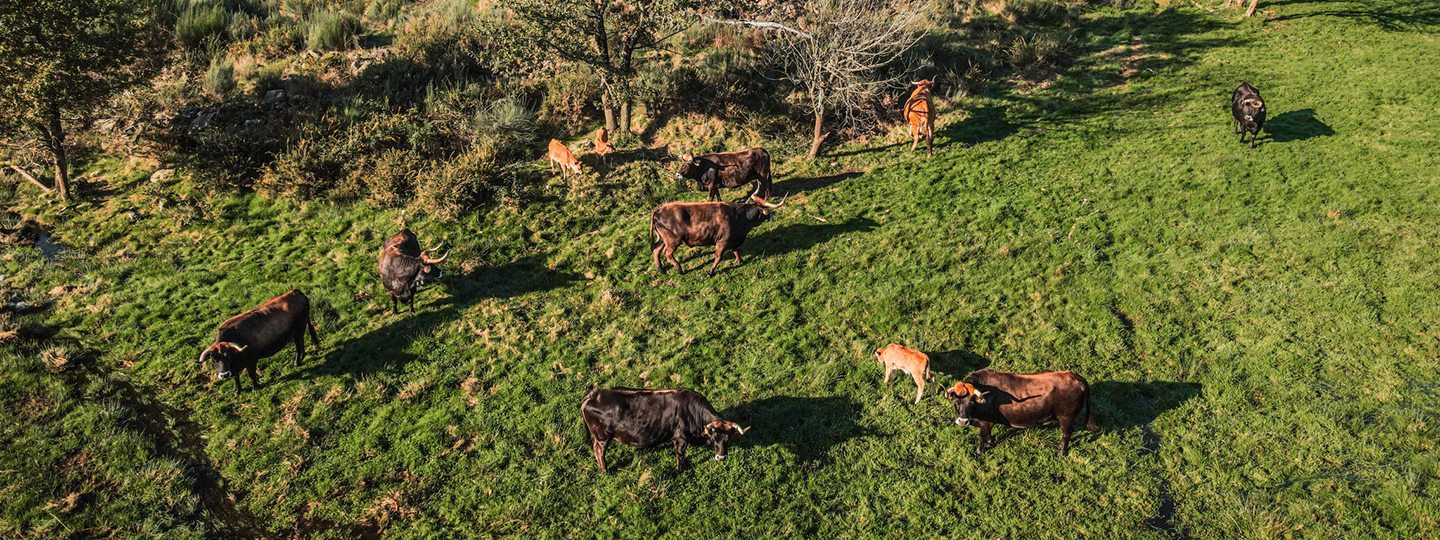
We begin at Carnes Irmãos Unidos, near Vila Pouca de Aguiar in Alto Tâmega, within the historic province of Trás-os-Montes e Alto Douro. We are welcomed by André, one of the eleven irmãos, and his nephew João. André lives nearby and oversees the cattle each day, while João is already closely involved in the family’s work. Built on values of respect, integrity and continuity, the business is carried forward with quiet conviction by the next generation.
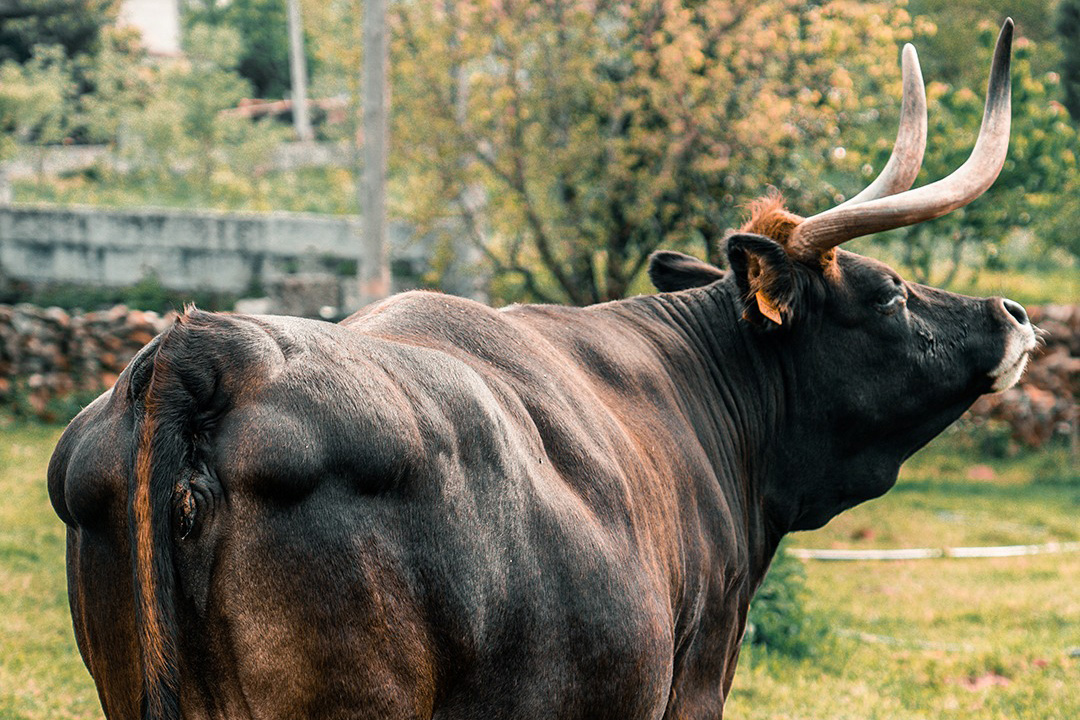
Inside the stable, the cattle stand powerful and composed, their thick winter coats catching the pale mountain light. Curved horns and broad frames speak of adaptation and endurance. These are not animals pushed for speed, but raised with patience. The focus here is clear: to preserve and elevate Portugal’s native breeds. Animal welfare is embedded in daily practice, maintaining natural habitats, providing quality feed and clean water, and respecting every stage of the animal’s life. The result is meat defined by origin, maturity and time.
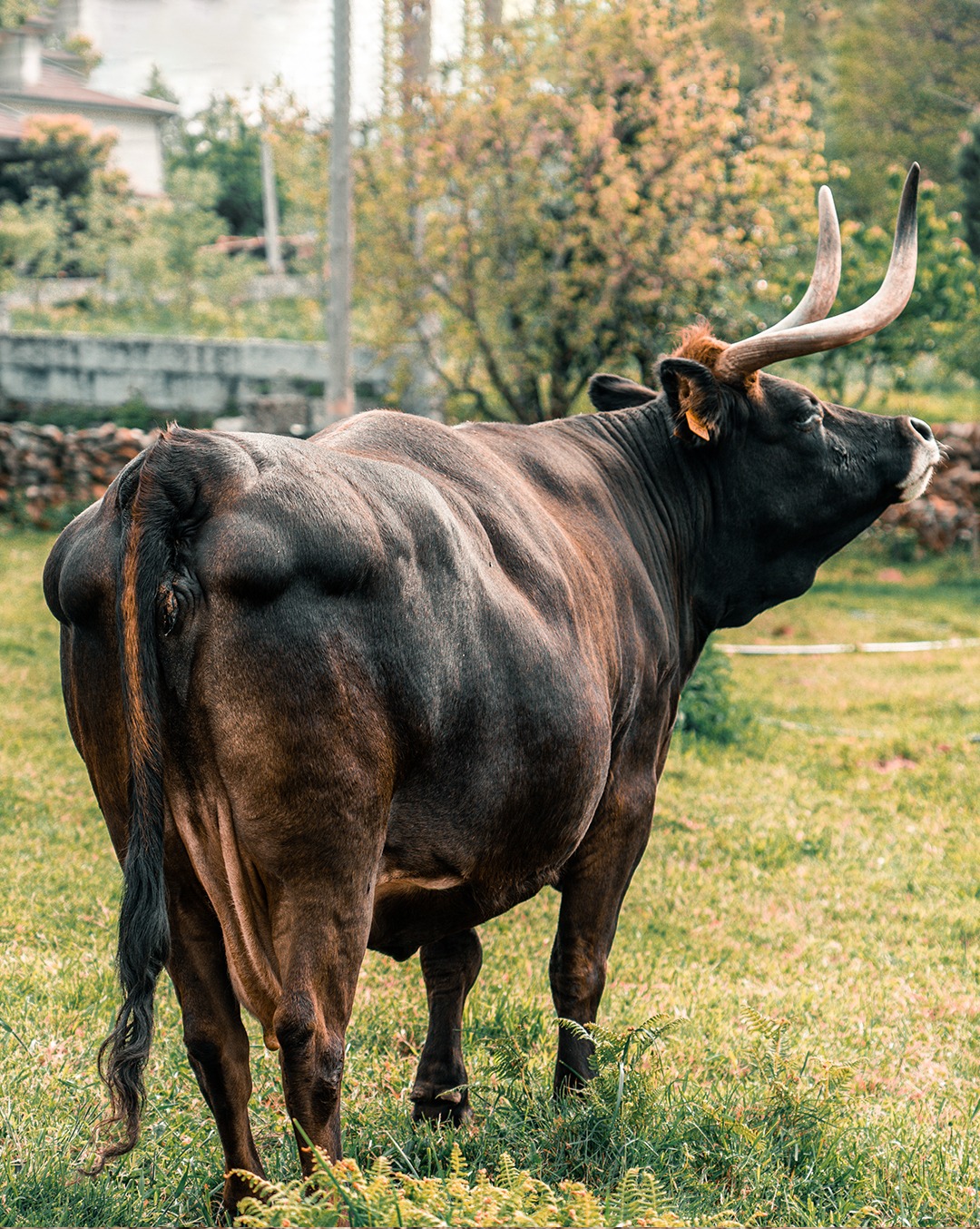
This is Maronesa and Mirandesa territory, home to two of Portugal’s most distinctive native cattle breeds. The Maronesa is a traditional mountain breed raised for beef with Protected Designation of Origin status, deeply connected to the rugged slopes of northern Portugal and valued for its balanced texture, flavourful meat and mountain character. The Mirandesa originates around Miranda do Douro in northeast Trás-os-Montes and is equally rooted in the region’s elevation and pasture. Raised extensively on natural grasses above 500 metres, Mirandesa cattle produce beef renowned for its tender texture, balanced marbling and rich flavour, qualities shaped by the distinct edaphic and climatic conditions of the plateau. Slow grown and grass fed, both breeds develop depth and structure through landscape and age.

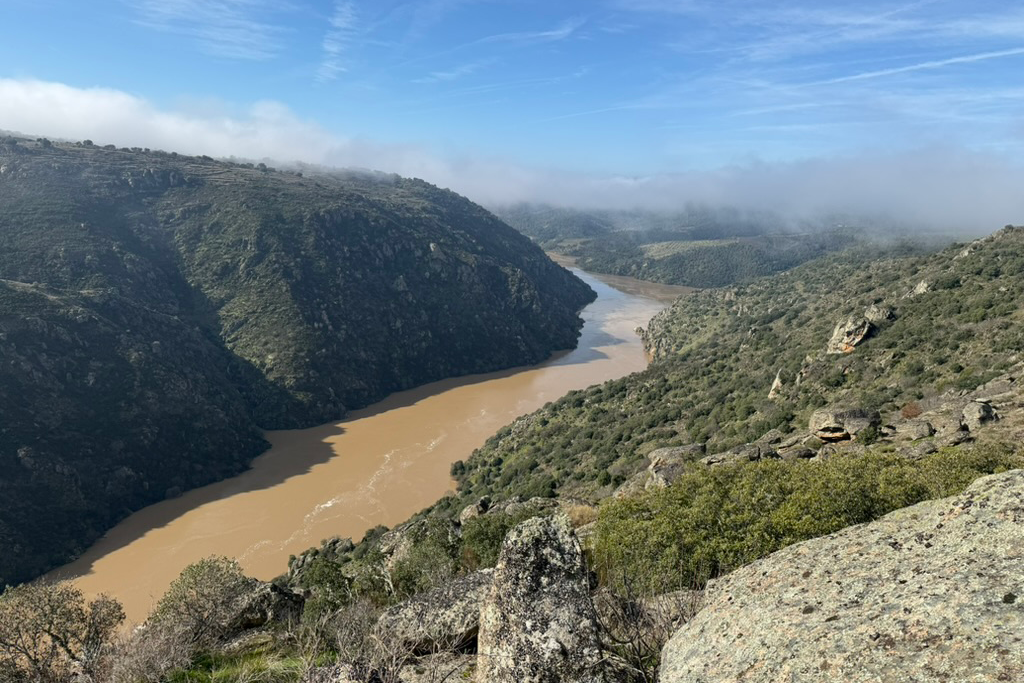
From Vila Pouca de Aguiar we travel east to Miranda do Douro and the village of Sendim, on the Planalto Mirandês near the dramatic Spanish Arribas. Here, identity feels older than the nation itself. Celtic roots predate the formation of Portugal. Mirandese is still spoken. Portuguese and Spanish communities remain culturally intertwined, sharing customs, rhythm and land.
Music sits at the centre of this living heritage. The sound of the gaita mirandesa and bombo carries across the plateau, accompanying ceremonies, pilgrimages and communal celebrations. The musicians of Miranda are not simply performers but custodians of language, memory and ritual, sustaining traditions that bind village life together.
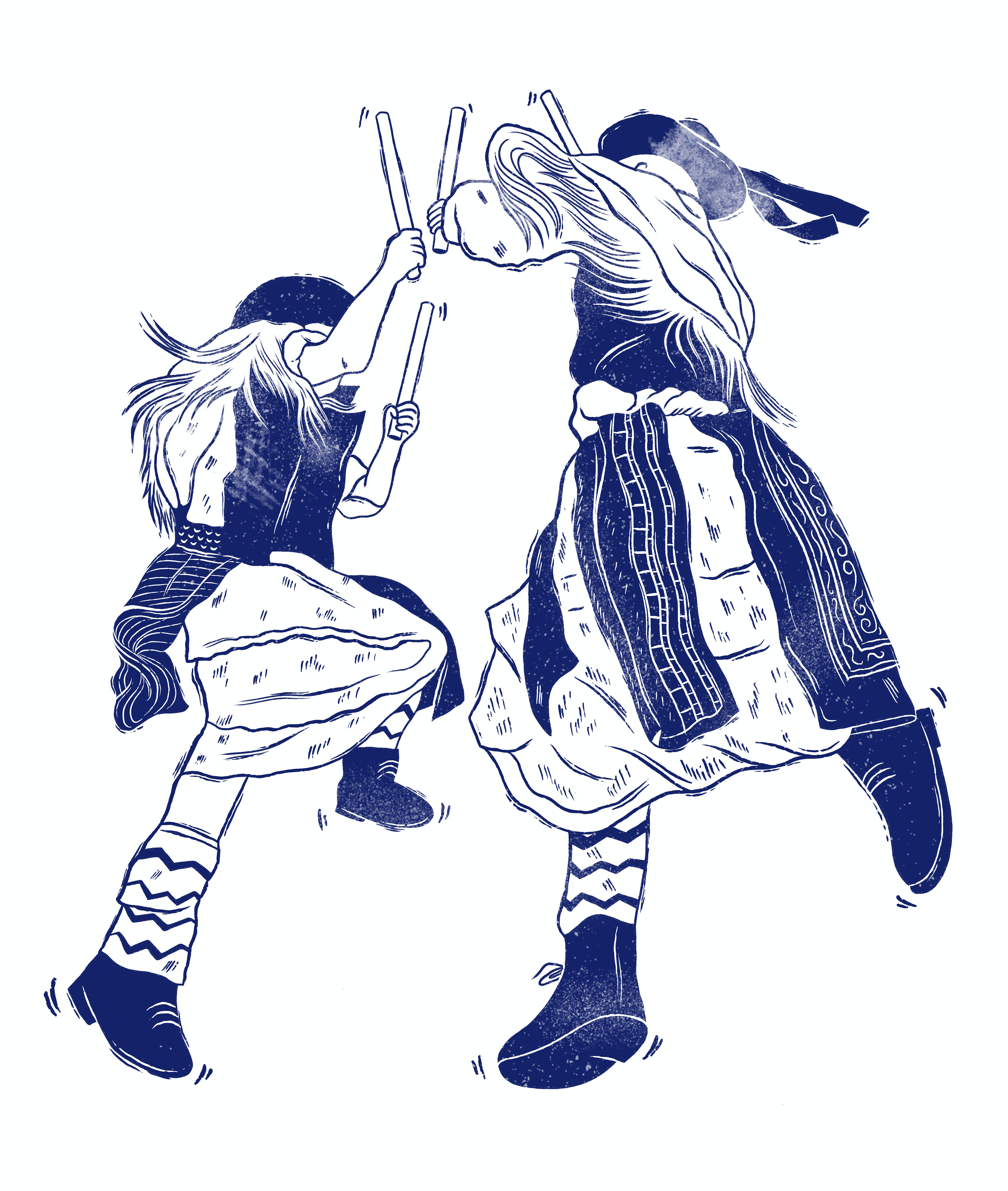
This is the birthplace of the Pauliteiros de Miranda, whose ritual stick dances echo pre Roman tradition, always led by pipe and drum. It is also home to the Capa de Honra, the heavy black shepherd’s cape of Miranda do Douro, a garment of dignity and symbolism that continues to inspire designers today, including Christian Louboutin.

No journey to Trás-os-Montes is complete without understanding alheira. Created in the 15th century by Portugal’s Jewish community, alheira was born from necessity. To avoid persecution, families produced a sausage resembling pork chouriço but made from poultry, bread and garlic, allowing them to outwardly conform while preserving their dietary laws. Over time, alheira became embedded in the wider culinary culture of the region. Today it is grilled and served with fried egg and potatoes, or reinterpreted in contemporary kitchens, always carrying its layered history. It remains one of Portugal’s most powerful examples of food as resilience.
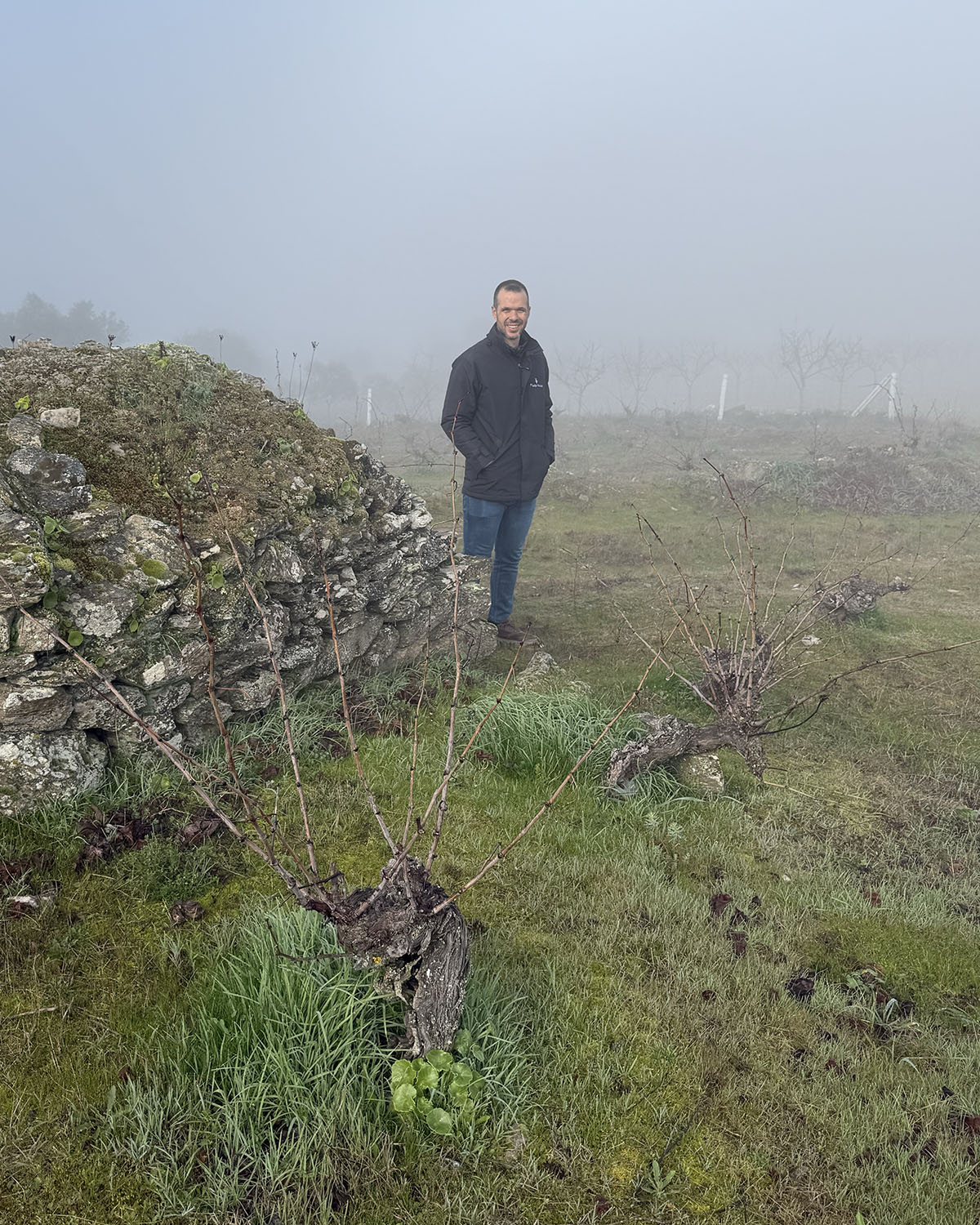
Trás-os-Montes DOC has long flown under the radar, but that is changing. A new generation of ambitious winemakers is redefining the region’s potential. Among them are Frederico Machado and Ricardo Alves of Arribas Wine Company, who feel a stronger connection to the Spanish DO Arribes across the river than to the Planalto Mirandês sub-region where they are officially based. Their vineyards cling to steep granite slopes rather than plateau land, ripening slowly in cooler conditions.
We stay with António Picotes, one of the region’s most exciting young growers. A trained civil engineer with a deep passion for wine, António returned to his family village to take over their old field-blend vineyards. He renovated his grandfather’s traditional cellar, preserving the granite lagares for foot treading and allowing fermentations to occur naturally. He produced his first palhete in 2019, a traditional co-fermentation of red and white grapes. Since then, he has expanded his range to include a white, a red and a single-vineyard expression.
His vineyards sit on quartz and hard schist soils, fractured metamorphic rock that lends the wines crystalline precision. They are expressive and energetic, yet unmistakably grounded in place. Picotes represents a confident new chapter for Trás-os-Montes wine: respectful of history, but not constrained by it.
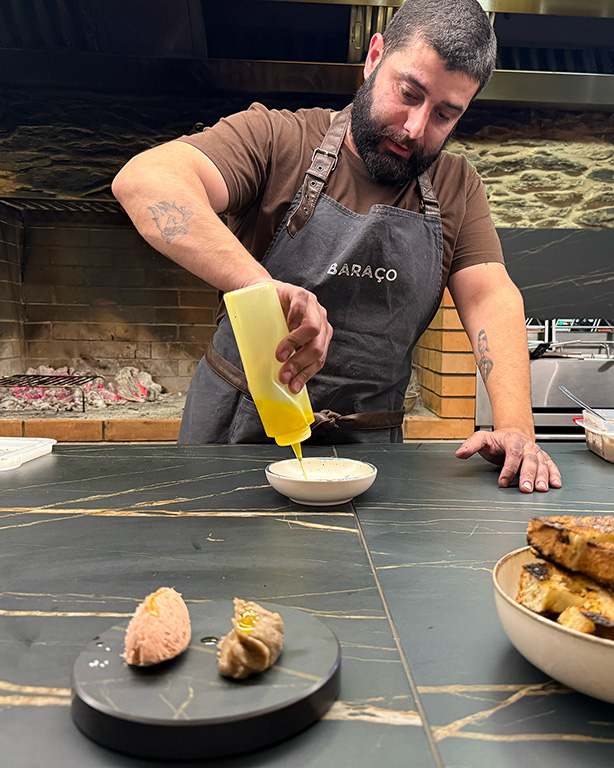
That evening we dine at Baraço, on the outskirts of Mogadouro. Chef Luís Martins returned during the pandemic to renovate his grandfather’s Transmontano farmhouse, transforming it into an atmospheric mountain restaurant centred around a large wood burning grill. After training in Lisbon and working internationally in Spain and Japan, Luís came back to reconnect with product, seasonality and regional heritage.
His cooking is rooted in traditional Transmontano flavours, shaped by the surrounding landscape and informed by a deep respect for foraged produce. We are served house-made alheira, wild watercress gathered locally, and a six-year-old Mirandesa ribeye and sirloin from mature native cattle. The meat is deeply flavoured, structured and unmistakably regional.
The next day we visit Forno de Jales, in the village of Vreia de Jales. Chefs Rita Gomes and João Pires have returned to their land with intent. After building experience in Porto, Spain and Switzerland, they chose to come back to Trás-os-Montes to showcase the very best of their region.
Maronesa beef from Carnes Irmãos Unidos takes centre stage, treated with respect and technical precision. Wild boar in massa tenra, porco bísaro, alheira ovos verdes and wild mushrooms from Tresminas appear throughout the menu, each ingredient rooted in its landscape. The Maronesa beef, in particular, receives almost regal treatment. Mature animals are grilled over fire and served simply, allowing years of mountain pasture to speak clearly.
Here, as at Baraço, the message is unmistakable. The future of Portuguese gastronomy lies not in abandoning the countryside, but in returning to it with knowledge, pride and ambition.

Stay up to date with the Bar Douro's Newsletter for monthly news, events and perks.