Max Graham, Founder
Walk into any Bar Douro and the tiles are the first thing you notice. In Portugal, azulejo tiles are everywhere, on churches and railway stations, in kitchens, across the front of ordinary houses. A room without them never quite feels Portuguese to me, so in our restaurants they were never going to be an afterthought.


The word azulejo comes from the Arabic al-zillīj, a polished stone. The first tiles came to Portugal from Seville, where Moorish potters had refined the craft. After a visit to the city, King Manuel I ordered tiles from its workshops for his palace in Sintra, and you can still see them there today. Over the centuries that followed, the Portuguese made the craft their own, covering whole walls and leaving no space bare.
The late 17th and early 18th centuries became the golden age, the Ciclo dos Mestres (Cycle of the Masters), with great blue-and-white panels for churches and palaces and large orders shipped across the Atlantic to Brazil. After the earthquake of 1755, tiles helped rebuild Lisbon in a plainer, practical style.
The early 20th century brought a revival, and Porto shows it best. In 1912 the side of the Igreja do Carmo, pictured, was covered in one of the city's largest tile panels. Designed by Silvestre Silvestri and painted by Carlos Branco, it was made across the river in Vila Nova de Gaia and tells the story of the Carmelite order, framed in Rococo scrolls to match the 18th-century church. A short walk away, Jorge Colaço covered the entrance hall of São Bento station with some 20,000 tiles, including the rabelo boats that once carried wine down the Douro.
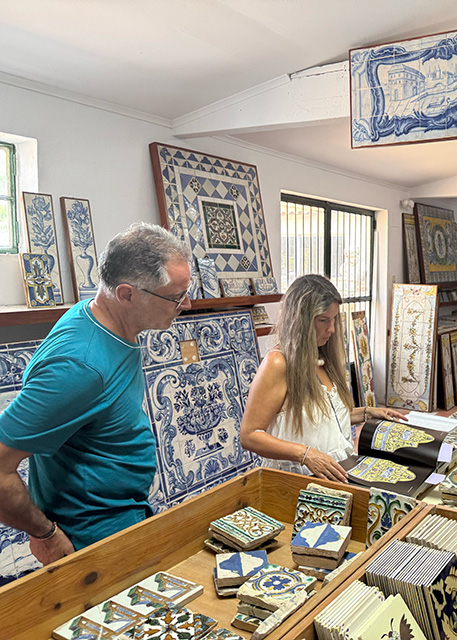
The tiles at London Bridge and City were made at Cerâmica Bicesse. Regrettably, the workshop has since closed, one example of how easily heritage crafts like this can be lost. Fortunately, for Soho we met Joana and her brother Tiago, who run Cerâmica Manuel Marques Antunes in Alcabideche, just outside Lisbon. It is a family atelier that covers the whole craft: they buy, sell and restore antique azulejos, make new ones by hand and fit them too. The painting is done by Flávio, who you’ll see in the photograph.

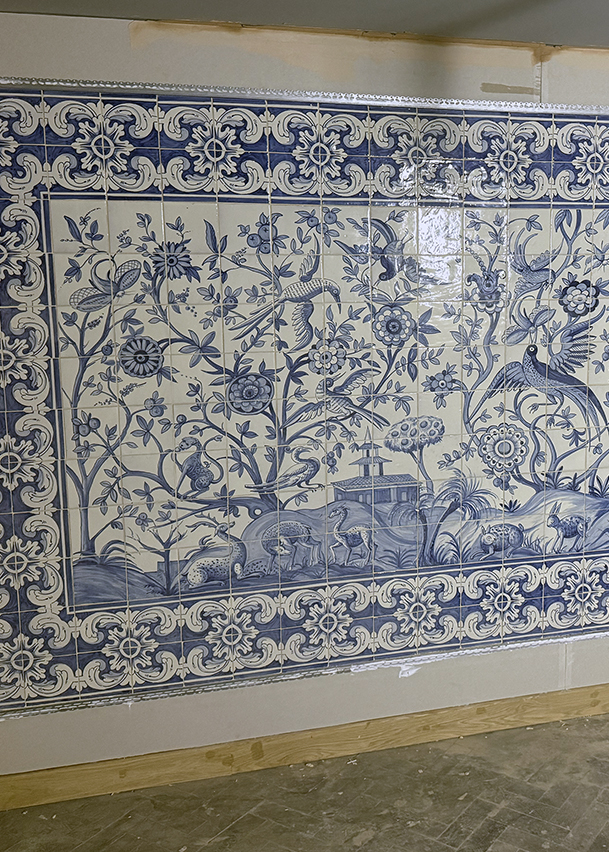
Downstairs at Soho, in the dining room next to the wine cellar, we wanted something older. We found it in the Convento da Madre de Deus in Lisbon, founded by Queen Leonor in 1509 and home to the Museu Nacional do Azulejo since 1965. Among its treasures is a three-part altar frontal from around 1650. Panels like this hung across the front of church altars, and Lisbon's potters painted them to imitate the embroidered silks and printed cottons then arriving from Asia. It is full of life: birds in flight, flowering branches, animals moving through the undergrowth and, if you look closely, a small pagoda. The yellow stands in for the gold thread of the textiles it copies.

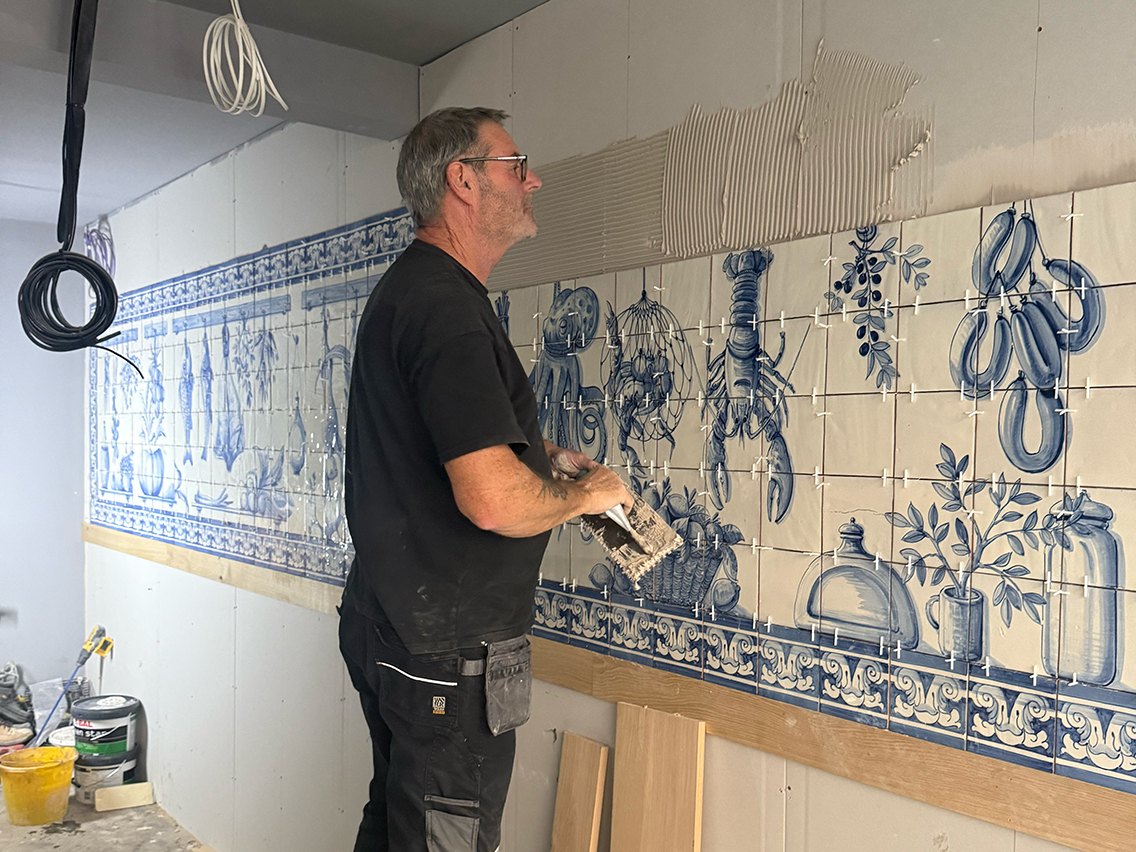
Bar Douro Soho opens at 10 Greek Street on the 4th November. Flávio's blue and white mural lines the dining room upstairs, and downstairs the altar keeps the wine cellar company.
Executive Chef Neuza Leal will be grilling native breed beef from the mountains of Trás-os-Montes and Minho. Enjoy a bold red from the Douro or a mineral white from Dão, and take a moment to look at the walls. Every tile was painted by hand, and no two are quite the same. We look forward to welcoming you.
Stay up to date with the Bar Douro's Newsletter for monthly news, events and perks.